
II. Noon Meal: In Every Grain and Leaf, We See Heaven, Earth, and Life
The monastery’s lunch is a symphony of colors and flavors. The stir‑fried greens are crisp and lively, the stewed tofu is soft and tender, and the fragrance of mushrooms slowly blooms on the tongue. As the young monk chews carefully, it is as if he is decoding the metaphors of life: the encounter and blending of different ingredients are like the collisions and interweavings of different experiences in life. From simple vegetarian food, he tastes abundant layers of richness.
In our own lives, we also constantly meet all kinds of people and events, just like these ingredients. We need to learn to accept and embrace them, letting them merge within our lives to create richer and more beautiful experiences. At the same time, we should be like the young monk, savoring every detail of life with care and attention, and feeling the beauty and meaning hidden within.
III. Evening Tea: A Sweet Period at the End of the Day
In the meditation room at night, there is a cup of clear tea and a small plate of peanuts. When a peanut shell cracks open with a soft “crunch,” its crisp aroma instantly fills the mouth. There are no exotic delicacies, yet this plain, crunchy flavor is like the small, unexpected joys in life—tiny and real, bringing a solid sense of contentment and satisfaction.
After a long, busy day, we need such a quiet moment to relax body and mind and enjoy the goodness of life. Evening tea is like a sweet period at the end of the day, allowing us to revisit the day’s experiences in tranquility and feel the warmth and happiness of life.
IV. The Essence of Food: Focus and Intention
The young monk teaches us a “mindful eating method”: the essence of food does not lie in how rare or expensive it is, but in whether you are willing to give it your full attention. When you wholeheartedly feel the taste of a single grain of rice, a mouthful of vegetables, or a single peanut, you are gently resisting a hectic life in the kindest way.
In our daily lives, we should also learn to be focused and intentional. Whether in work, study, or life, we should devote ourselves fully and enjoy every moment of the process. Only then can we truly feel the beauty and meaning of life.
V. Three Things to Try at Your Next Meal
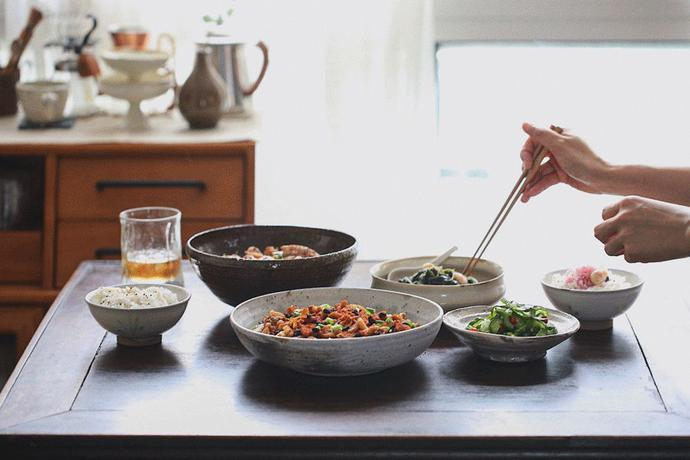
Put down your phone and eat with full attention for 5 minutes: During a meal, set your phone aside and focus on the taste and texture of the food. Feel how the food changes in your mouth and enjoy the process of eating.
Carefully savor three flavors or textures of your food: While eating, carefully experience the flavors and textures. Try to distinguish sweetness, saltiness, sourness, bitterness, and more, and notice the layers and richness of your meal.
After eating, gently say to yourself, “I am nourished.”: When you finish your meal, softly say in your heart, “I am nourished.” Be grateful for the energy and nutrition that food gives you, and feel the beauty and happiness of life.
VI. Philosophical Reflections on Food and Life
Food is not only a pleasure for the taste buds, but also a philosophy of living. It teaches us how to feel life, how to cherish the present moment, and how to share with others. In food, we can find wisdom and strength for our journey through life.
(1) Taste: The Anchor of Emotion and Memory
Why can a simple home‑cooked dish instantly soothe a wandering heart? The answer lies in our sensory memories. Smell and taste have unique neural pathways that bypass the brain’s rational analysis areas and go straight to the core of emotion and memory—this is the mystery revealed by the “Proust effect.”
These taste memories are often closely tied to “love.” In the documentary “A Bite of China,” a mother in Altay, Xinjiang, prepares a table full of delicious dishes for her daughter who is about to leave home to study. The flavor of home wrapped in those dishes becomes something the daughter will long for her whole life. These foods, infused with positive emotional memories, become our personal “comfort foods.” Their healing power comes not only from how tasty they are, but from the way they act like keys that instantly unlock stored memories of warm relationships and a deep sense of safety.
Thus, food becomes the most stable and accessible support in our emotional system. Behind the simple phrase “Make sure you eat well” lies care, hope, and the most modest yet profound expression of love.
(2) Cooking: A Practice in Living in the Present
For the one who cooks, the kitchen is a place of practice, and the utensils are like instruments of the Way. Su Dongpo’s life was full of hardship, yet whether in Huangzhou, Huizhou, or Danzhou, he always managed to draw joy from the most ordinary local ingredients. When creating “Dongpo Pork,” he waited patiently for the right heat, calm and unhurried, dissolving the pressures of a difficult life in his complete immersion in the process of cooking. This kind of composure—“when the time and heat are right, it will naturally be delicious”—is a great spiritual cultivation. Frying, stir‑frying, deep‑frying, and stewing are like repeated forging, and the sour, sweet, bitter, and spicy flavors mirror the many tastes of life.
Cooking thus becomes a classic “flow” experience. The focused feel of kneading dough and the anticipated aroma of soup simmering on the stove pull our attention away from chaotic thoughts and back to the present moment, bringing psychological relief and integration. In this process, we are not only feeding our families, but also soothing ourselves. As an article from “People’s Daily” put it, “Those who cry while eating can carry on; those who cry while cooking can go even further.”
(3) Eating Together: A Warm Ritual of Human Connection
VII. Conclusion
Food is a mirror of life, and also its remedy. When we eat a meal in all seriousness, we are not only nourishing the body but also affirming an earnest attitude toward life itself. Amid the clinking of bowls and plates and the laughter of friends and family, we can briefly forget external anxieties and touch the most solid and warm texture of existence.
From today on, let every meal become a practice in returning to the present. Those who know how to eat well are the ones who know how to live well. Let us find strength in food and feel life’s warmth and hope in every bite of deliciousness. No matter how hard life becomes, never forget to give yourself the comfort of good food, for food is not only a pleasure of taste, but also nourishment for the soul.