日式豚骨拉面
Between milky white and gray: a precise calculation of tonkotsu broth
Many people want to make tonkotsu ramen at home. The result? The soup base is not white, like washing pot water. The noodles are overcooked and soft like mud. The char siu pork is dry and tasteless. Finally, it becomes a bowl of "soy sauce soup noodles". It's not the Hakata flavor that is "thick as milk, strong noodles". To be precise, it's not a matter of luck, it's a matter of control. You must understand that you can't be lazy in baking, and neither can you cook noodles. No almost, just just right.
The reason is simple. I had a bowl of ramen at a back alley restaurant in Fukuoka. The soup was as thick as milk. The face is strong and the teeth are bounced. That "simple complexity" shocked me. As a Danish pastry chef, I am used to thinking in grams and minutes. But at that moment, I decided to challenge this national Japanese dish. Bring the rigor of baking to the kitchen.
The first attempt, failed. Complete failure. The heat is too large, and the grease is separated. The soup noodles have a cloudy marbling layer instead of emulsified gelatin. The noodles are overcooked and lose their elasticity, like a damp paper towel. The char siu roll is not tight and falls apart directly when sliced. I can't find that "rich but not greasy" balance. Frustration? No, that's a data error. I need to recalibrate.
Wait, this soup is not right. gray. Grease is not emulsified. The fire is too big. Adjust it down. Re-time.
I am reminded of the rigorous standards when studying fermentation control in Copenhagen. If the temperature fluctuates by one degree, the dough will be wasted. It's the same here. I study the "boiling method" of Japanese ramen craftsmen. The secret of discovery lies in the precise control of "boiling emulsification, regular hydration, and ice water washing". Adjust the ratio of pork bones to water. Finally, the logic works.
Pork bones. Blanch water. Three times.
Boiling water. Wash it off. Until the blood in the bone marrow completely disappears. When processing pork bones, bone marrow splashes onto the apron, making it greasy and difficult to wash. But this step cannot be saved, it will affect the taste, and the soup will always be gray. You have to be patient. Crush the pork bones to expose the bone marrow. This is the source of flavor and the key to emulsification.
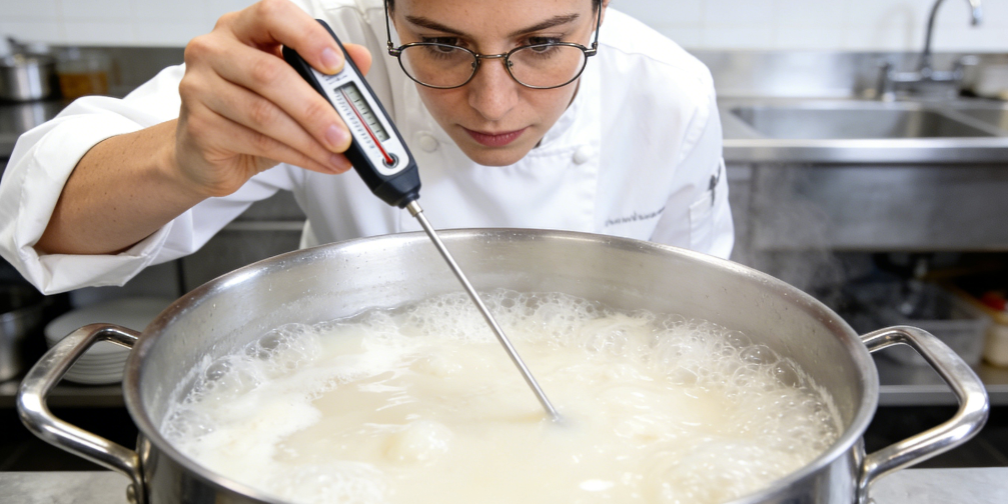
Place in a cauldron. Add water. The proportions should be precise. 1 kg bone, 1.5 liters of water. It's too much, and the taste is bland. Less, burnt. Turn on the fire. Let the water roll wildly. It's not a slight boil, it's a violent boil. Only a violent rolling can forcibly break up the fat and collagen and merge into a milky white lotion.
Wait, this soup temperature reading seems to be wrong. Remeasure. The scale is a little crooked, calibrate it. Okay, continue.
I stirred the soup base, and suddenly - the light outside the window changed. Affect my judgment of soup color. Close the blackout curtains. Continue.
In this small studio, the workbench is spotless. The crisper box contains cut chopped green onions, neatly numbered. The thermometer on the wall glowed red. I stared at the changes in the pot. Time is the only variable.
| Boiling stage | Time span | Characteristics of soup color change | Key operational actions |
|---|---|---|---|
| Initial boiling | 0-2 hours | Crystal clear with a small amount of foam | Skim off the foam and keep the heat boiling |
| Early stage of emulsification | 2-6 hours | Slightly turbid, light rice soup color | Keep the water level at a boiling water level every 30 minutes |
| Fully emulsified | 6-10 hours | Thick milky white with no marbling on the surface | Roll violently, so that the water and oil are forcibly integrated |
| Flavor concentrated | 10-12 hours | The ivory is white, and the spoon does not fall | Turn to medium-high heat, reduce the thick soup, and test the viscosity |
To be precise, there is no shortcut to tonkotsu soup, it must be rolled for 12 hours, there is no almost, only just right.
This is not a metaphor. It is a physical reaction. Collagen hydrolyzed, fat particles suspended. One minute less, the emulsification is incomplete. For an extra hour, the aroma will evaporate. I wouldn't apologize for having twelve types of flour, because each one has its usefulness. Similarly, I will not apologize for the 12-hour wait. This is a necessary cost.
Try the soup when it is warm until the tip of the tongue. hiss. But the emulsification is right. The taste is smooth and not grainy.
Next is the noodles. Japanese alkaline water surface. The cooking time must be accurate to the second.
- The criterion for judging the completion of emulsification of the soup base: when the soup spoon is lifted, the soup flows down in a straight line and does not break. After cooling, a thin layer of jelly forms on the surface instead of a separated layer of oil. There is a slight stickiness in the mouth, but it is easy to swallow and does not stick to the throat.
- Ramen cooking time control points: Put the boiling water in the pot, and the water temperature must return to above 98°C. Cook until 8 minutes cooked (usually 30 seconds less than package instructions) and remove immediately. Pass through ice water. It must be passed through ice water. The sudden cooling allows the surface of the noodles to shrink and the inside to remain elastic.
This step cannot be saved, and it will affect the taste. The noodles will continue to heat up in the hot soup, so you have to leave some room.
Char siu. Pork belly roll tightly. Tie with cotton rope. The distance of each lap must be equal. Make sure the heat is even. Slow cook at low temperature, then fry the surface until fragrant. When slicing, the blade should be sharp and done in one go. You can't saw, the meat will fall apart after sawing.
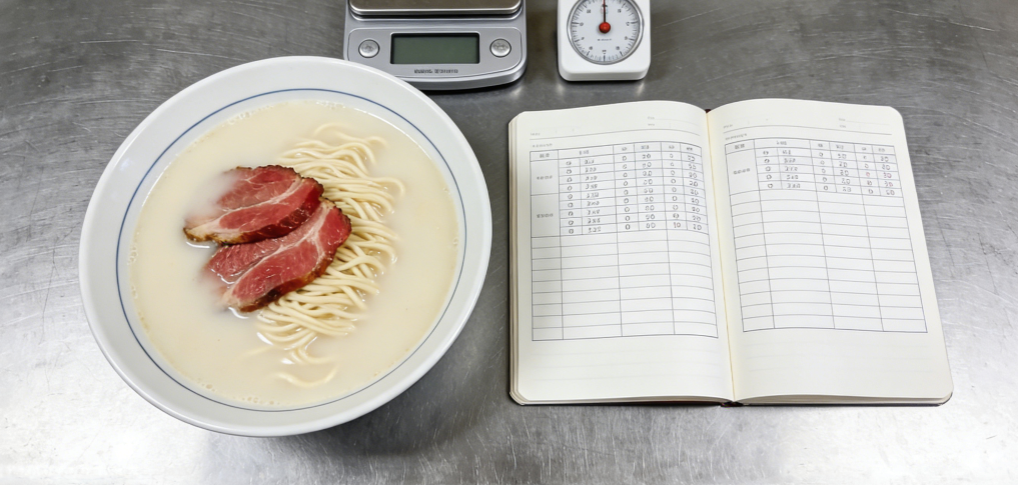
Assembly. The bowl should be preheated. Japanese Ramen Bowl, No. 03. Base soy sauce, exactly 15 grams. Poured into the piping hot tonkotsu broth. The moment the soup and sauce blend, the aroma explodes. Add the drained noodles. Arrange two thick-cut slices of char siu. Half a runny egg, the white solidifies, and the yolk is semi-fluid, which is the art of time. Sprinkle with a handful of chopped green onions and a few slices of seaweed.
Successfully made tonkotsu ramen with thick soup and strong noodles. Understand what Japanese cuisine and Scandinavian baking have in common. Precise timing. Respect the ingredients. Focus on the present. The taste arrives naturally. This is not talent, but repeated correction and ultimate control. Like rye bread that has been fermented for three days, the acidity is just right. The soup here is just the right amount of concentration.
Let time do the work for you, focus on the moment, and you can bake well. Or rather, good ramen.
I picked up the last chopstick ramen. There is still half a bowl left in the soup base. The thermometer is still in the pan. I have to record the final data. The face is about to be lumpy.