Dragon Well Shrimp
The Geometry of Disappointment: A Forensic Analysis of Longjing Shrimp
Three boxes. Arrived within twenty minutes of each other. From three "prestigious" Hangzhou restaurants in the city. My studio is quiet, save for the hum of the refrigeration unit and the scratching of my pen against the clipboard. I calibrated the digital scale three times before opening the first box. Precision is not a suggestion; it is the only language food speaks honestly. I am looking for Longjing Shrimp. The classic. The delicate dance between river shrimp and Mingqian Longjing tea. Instead? I found a crime scene.
The market is flooded with impostors. You see the name on the menu, "Longjing Shrimp," and you expect clarity. Freshness. A scent that lifts the spirit. What you get is rubber. Frozen shrimp thawed too quickly, texture destroyed before the wok even heats up. Tea leaves used as mere decoration, floating on top like green confetti, offering zero aroma. And the heat control? Non-existent. The shrimp sweat out their juices, boiling in their own misery instead of searing. It becomes "Green Tea Stir-fried Shrimp Balls." A tragedy.
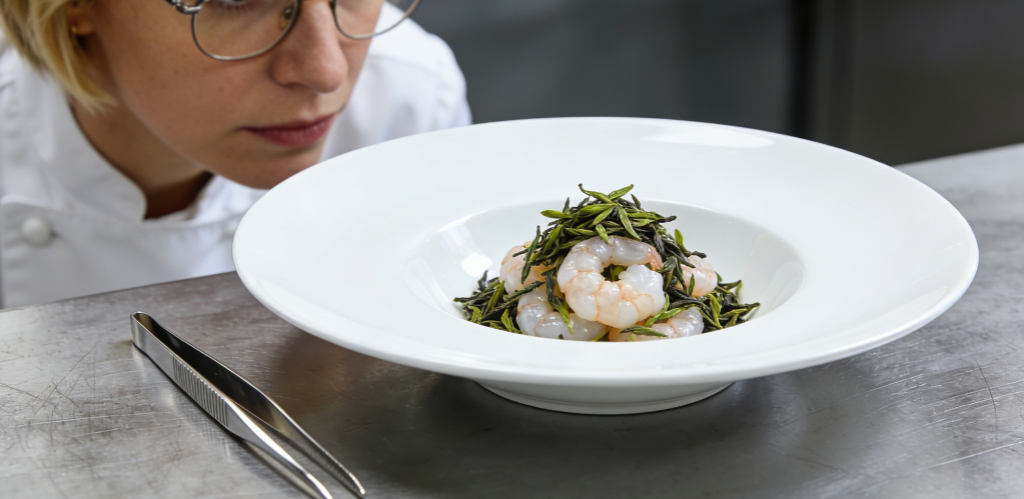
Let's start with the起因 (the cause). I ordered these to find one worthy version. One restaurant that respects the ingredient. The challenge was immediate. Box A. The shrimp had a strange, synthetic bounce. Too firm. I tested a piece. Alkaline. They used alum to puff the shrimp. Disgusting. It masks the lack of freshness but leaves a metallic aftertaste that coats the tongue. Box B was worse. The tea leaves were dry, brittle, and clearly added post-cooking. No infusion. Just visual noise. Box C? The oil temperature was catastrophic. The shrimp shrank into hard, rubbery curls. Like erasers.
Wait. This temperature reading seems off. Let me recalibrate the probe. The ambient light in the studio shifted. The clouds moved. Shadows stretched across the prep table. I pulled the blackout curtain. Better. Now the color assessment is accurate. The shrimp in Box C are not just cooked; they are abused.
I cannot accept this variability. In Copenhagen, when we temper chocolate, a deviation of half a degree ruins the crystallization. Here, the margin for error is equally thin, yet ignored. I had to intervene. I stopped tasting the delivery samples. I needed a control group. A baseline of truth. I went to my storage. Fresh river shrimp, kept at exactly 4°C. Mingqian Longjing tea, harvested before the Qingming festival, stored in an airtight tin to preserve the volatile aromatics. I would define the standard myself.
To be fair, judging shrimp without a framework is just complaining. I need data. I constructed a matrix. If you want to understand why your shrimp tastes like a tire, look at the processing method.
| Shrimp Processing Grade | Texture Profile | Flavor Absorption | Verdict |
|---|---|---|---|
| Fresh, Hand-Peeled | Snappy, natural resistance, juicy interior | High, absorbs tea essence deeply | Acceptable |
| Frozen, Quick-Thawed | Mushy exterior, mealy center | Low, water-logged, dilutes sauce | Reject |
| Alum/Chemical Treated | Artificially crunchy, rubbery, metallic finish | None, chemical barrier prevents infusion | Dangerous |
| Overcooked (High Heat) | Shrunken, hard, dry fibrous strands | Burnt, bitter notes dominate | Failed |
See? It is not magic. It is biology and physics. The alum-treated shrimp from Restaurant A created a barrier. The tea liquor couldn't penetrate. It sat on the surface. Useless.
So then, how do you fix it? You must control the variables. You cannot rely on "feel" or "experience." You need metrics. When selecting the tea, you are not just picking "green leaves." You are selecting a flavor profile.
- Harvest Time: Must be pre-Qingming (before April 5th). Later harvests have thicker leaves and more tannins, resulting in bitterness rather than floral notes.
- Leaf Integrity: Whole buds or one bud with one leaf. Broken fragments release tannins too fast, turning the sauce a murky brown and tasting astringent.
- Aroma Test: Dry leaves should smell like roasted chestnuts and orchids. If it smells grassy or flat, the storage was compromised.
And the heat. This is where most fail. They throw everything into a screaming hot wok and pray. That is not cooking; that is gambling.
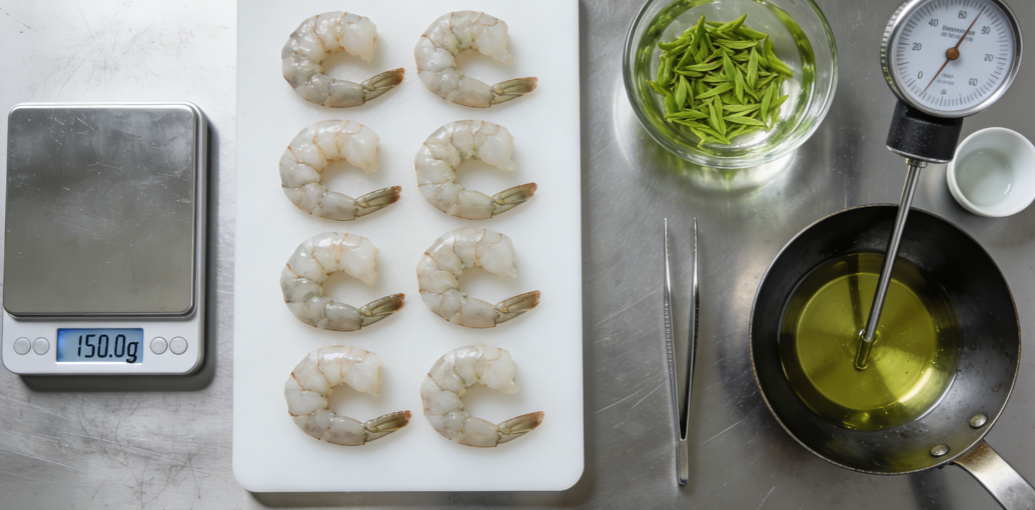
- Oil Temperature Entry: 120°C (248°F). Precisely. Use a thermometer. If the oil smokes, you have already failed. The proteins will seize instantly.
- Visual Cue: The shrimp should turn opaque slowly, curling into a gentle "C" shape. An "O" shape means overcooked.
- Tea Integration: Tea liquor is added at 90°C, not boiling. Boiling water kills the delicate top notes of the Longjing, leaving only the bitter base.
Accurately speaking, Longjing Shrimp has no "almost"; there is only "just right"—shrimp just barely cooked through, tea aroma just fully released, one second more is a crime.
I cooked my control batch. The studio smelled different now. Not of grease and despair, but of spring. The shrimp curled gently. The color was a pale, translucent pink, dusted with the vibrant green of the tea. I cut into one. The knife met slight resistance, then gave way. Juicy. The tea flavor was inside the meat, not just on the shell.
The result of this five-dimensional analysis—appearance, aroma, texture, plating, value—is stark. The industrial versions are dead on arrival. They prioritize speed and shelf-life over soul. The handmade version, the one adhering to strict parameters, sings. The difference isn't subtle. It is the difference between a recorded symphony and a live performance in a cathedral.
I recalled my time studying Asian culinary techniques in a small kitchen in Copenhagen. The chef there, an old man from Suzhou, slapped my hand when I tried to rush the marination. "Time is an ingredient," he said. "You cannot buy it faster." He was right. The shrimp need time to absorb the marinade of egg white and starch. The tea needs time to infuse without bitterness.
What's more, the plating matters. Not for vanity, but for temperature retention. A cold plate kills the aroma immediately. I pre-heated my serving porcelain to 50°C. When the shrimp hit the plate, the steam carried the scent upward. The delivery boxes? Styrofoam. Heat traps that turn the dish soggy within minutes.
I am noting the data. Restaurant A: 2/10. Toxic texture. Restaurant B: 3/10. Beautiful lie, no substance. Restaurant C: 4/10. Aggressive cooking, ruined ingredients. My control: 9.5/10. The half-point deduction is because I am never fully satisfied. Perhaps the salt ratio was 0.1 grams high.
Wait, the lighting again. The sun is dipping lower. The angle of the shadow on the third sample is changing the perceived glossiness of the sauce. I need to re-photograph. The tea leaves in sample three are starting to oxidize, turning a dull yellow-brown at the edges. They are dying on the plate.
I picked up the tweezers. Adjusted a single leaf. No, that's not right. The alignment is off by two millimeters. The visual balance is compromised. I reached for the cleaning cloth to wipe a microscopic smudge of oil from the rim of the plate. The silence in the studio is heavy. Only the ticking of the timer matters now.
I recorded the final temperature of the control sample. 62°C internal. Perfect. But look at the delivery samples. They are cooling. The fat is congealing. The sadness of cold, rubbery shrimp is palpable. I must document this decay. It is part of the review. The failure is as important as the success. Actually, more so. It teaches you what to avoid.
I dipped a spoon into the control sauce. Clear. Light. The sweetness of the shrimp balances the vegetal bitterness of the tea. It is a equation solved. Now, back to the failures. I need to dissect the shrimp from Restaurant A again. Under the microscope, perhaps? No, the naked eye is enough. The fibers are torn. Violent handling.
My pen ran out of ink. I swapped it for a fresh one. Black ink only. Colors distract. I wrote down "Alum detected via pH strip." The strip turned a violent blue. Unacceptable.
The clock on the wall ticks. 14:03. The tea in the control cup has steeped too long. It is becoming bitter. I must pour it out. Start over. Perfection is fleeting. It exists only for a moment. If you blink, you miss it. If you hesitate, the shrimp toughens.
I stared at the three delivery boxes. They looked like trash now. Evidence of laziness. I pushed them to the edge of the counter. Out of the way. They do not belong in my clean space. The stainless steel gleams under the lights. I wiped the surface again. A speck of dust. Gone.
The third sample's tea leaves are definitely yellowing now. The oxidation is accelerating. I need to capture this degradation in the logbook before the visual evidence disappears completely. The camera lens needs cleaning too. There is a fingerprint on the bezel. Unforgivable.
Let time do the work for you, focus on the moment, and you can make good baking. But this? This is cooking. And cooking waits for no one.
I picked up the probe thermometer again. Checked the ambient temperature of the room. 21.5°C. Stable. Good. Now, the pH strip for sample B. I dipped it. The color change was slow. Indecisive. Just like the chef who made it. I held the strip against the color chart. Squinted. The light from the window hit the paper wrong. I moved three steps to the left. Better.
The pen scratched across the paper. Fast. Urgent. The data must be captured. The truth must be recorded. No embellishments. No softening the blow. The shrimp was rubber. The tea was dust. The oil was burnt.
I looked at my own creation. Steam rising in a perfect, straight column. The scent of orchids and fresh water. It is beautiful. But for how long? Thirty seconds? One minute?
I reached for the camera. Focused on the glistening surface of a single shrimp. The reflection of the studio light danced on the curve. Beautiful. But wait. Is that a tiny bubble in the starch coating? Imperfection.
I need to redo the batch.
The tea leaves in the third sample have turned completely brown. It looks like mud. I must take a photo immediately before it disintegrates further. The shutter click echoed in the silent room. Done. Now, where did I put the pH strips for the fourth test? I don't have a fourth test. I only have three. But maybe I should order a fourth. From a different district. Just to be sure. Certainty requires data. More data.
My hand hovered over the phone. The screen was smudged. I wiped it with my apron. No, the apron might have flour. I used a microfiber cloth. Clean. Always clean.
The shrimp in the control dish is cooling. The texture will change. It will lose its snap. I have to eat it now. Or throw it away. Waste is a sin. But eating imperfect food is also a sin.
I picked up the chopsticks. Hesitated.
The third sample's tea leaves are floating strangely. The surface tension is off. Did they use detergent in the wash? Unlikely. But possible. Everything is suspect.
I wrote "Anomaly detected in Sample 3 surface tension" in the log. Underlined it twice.
The sun has set. The studio lights are the only illumination now. Harsh. Revealing every flaw. The delivery boxes cast long, ugly shadows. My control plate glows.
I need to calibrate the scale again. Just to be sure. 0.0g. Perfect.
But the pen mark on the clipboard from earlier... it's slightly smudged. I rubbed it. It smeared. Now the page is dirty. I have to rewrite the entire log. From the beginning.
The tea smell is fading.
Wait, did I turn off the gas burner? Yes. I checked twice.
The third sample's leaves are now black. Completely dead.
I need a new notebook. This one is compromised.